Table of Contents
ToggleFire alarm systems aren’t just equipment, they’re life-saving infrastructure that needs proper setup and ongoing care. Whether you’re upgrading an outdated system, meeting code requirements for a renovation, or just trying to figure out why your detector chirps at 2 a.m., understanding professional fire alarm system services helps you make smarter decisions. This guide covers what these services include, when to hire a pro versus tackling basic tasks yourself, and how to find a qualified technician who won’t waste your time or money.
Key Takeaways
- Fire alarm system services include installation, routine maintenance, inspections, and repairs—all of which require licensed professionals in most states to remain code-compliant and insured.
- Annual inspections are the minimum standard, and maintenance programs address critical tasks like detector cleaning, battery testing, and firmware updates that prevent false alarms and system failures.
- Homeowners can handle basic tasks like replacing batteries and testing detectors monthly, but should always hire professionals for hardwired installations, control panel programming, and any work affecting NFPA 72 compliance.
- When choosing a fire alarm service provider, verify licensing, look for NICET certification among technicians, and compare detailed quotes that break down labor, materials, and testing costs separately.
- Monitored alarm systems require professional installation and maintenance to maintain service contracts and avoid fire department fines from false dispatches.
- Investing in properly licensed professionals protects your insurance coverage, prevents liability issues, and ensures your system works reliably when seconds count.
What Are Fire Alarm System Services?
Fire alarm system services cover everything from initial system design and installation to routine inspections, repairs, and full replacements. These aren’t services you’ll typically find at your local handyman, most states require licensed low-voltage electrical contractors or specialized fire alarm technicians to work on these systems legally.
A full-service provider handles NFPA 72 compliance, which is the National Fire Alarm and Signaling Code governing fire alarm installation and maintenance in the U.S. They’ll assess your home’s layout, calculate coverage zones, install devices at proper heights and spacing, connect everything to a control panel, and integrate with monitoring services if needed.
Routine maintenance services include battery replacement, sensor cleaning, smoke chamber testing, and system diagnostics. Many providers offer annual or semi-annual inspection contracts that keep your system code-compliant and catch problems before they become emergencies. These inspections typically include testing all initiating devices (smoke detectors, heat detectors, pull stations), notification appliances (horns, strobes), and control panel functions.
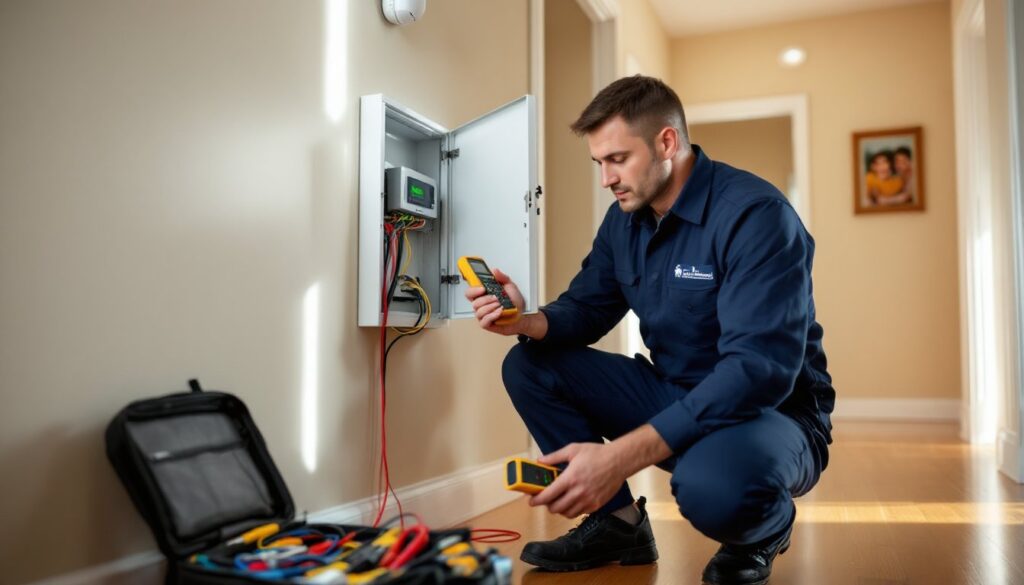
Repair services address issues like false alarms, intermittent signals, failed zones, and device malfunctions. Technicians use specialized diagnostic equipment to pinpoint wiring faults, communication errors, or failing components, problems that aren’t obvious to the average homeowner staring at a blinking control panel.
Types of Fire Alarm Services Available for Homeowners
Installation and Replacement Services
New installations start with a site assessment where technicians evaluate square footage, ceiling heights, room configurations, and potential heat or smoke sources. They’ll recommend system types, conventional (each zone covers multiple devices), addressable (each device has a unique identifier), or wireless, based on your home’s construction and budget.
For existing homes, installation often means routing low-voltage wiring (typically 18/2 or 18/4 gauge) through walls and attics. New construction makes this easier since wiring runs happen during the rough-in phase before drywall. Wireless systems reduce installation complexity but require regular battery maintenance across all devices.
Replacement services become necessary when systems age beyond reliable operation, typically 10-15 years for most residential fire alarm equipment. Smoke detector sensors degrade over time, control panels lose support from manufacturers, and older systems can’t integrate with modern smart home platforms or professional monitoring services.
Full system replacements include removing old devices, patching and repainting mounting locations if switching device types, installing new control panels and backup batteries, programming zones, and conducting final testing and commissioning.
Inspection, Testing, and Maintenance Programs
Annual inspections are the bare minimum for residential fire alarms, though NFPA 72 recommends more frequent testing for certain device types. Inspections verify that smoke detectors respond to test aerosol, heat detectors activate at proper temperatures, manual pull stations trigger alarms, and audible/visual notification devices work at required decibel levels and candela ratings.
Maintenance programs address the tedious but essential tasks: cleaning detector covers and sensors (dust and insects cause most false alarms), testing backup batteries under load, checking wire connections for corrosion, verifying control panel communications, and updating firmware on addressable systems.
Some providers offer monitored maintenance contracts that include remote diagnostics. These systems alert the service company when a device fails a self-test, a zone shows trouble, or battery voltage drops, catching problems before you discover them during an actual emergency.
Testing services include sensitivity testing for smoke detectors (making sure they’re not too sensitive or too sluggish), alarm verification tests, and emergency response drills to ensure everyone in the household understands alarm signals and evacuation procedures.
When to Call a Professional vs. DIY Fire Alarm Work
DIY-appropriate tasks are limited but important. Homeowners can and should replace smoke detector batteries, test devices monthly using the test button, and keep detector covers clean using a vacuum brush attachment. Most battery-powered standalone smoke alarms (not connected to a central system) can be installed by homeowners following manufacturer instructions and local code requirements for placement.
You can install basic interconnected smoke alarms using wireless RF technology without touching your electrical system, brands like First Alert and Kidde make these for DIY installation. Just verify your local code allows them as primary protection.
Always call a professional for:
- Any hardwired system installation or modification
- Work on low-voltage fire alarm circuits connected to a control panel
- System troubleshooting beyond battery replacement
- Adding zones or devices to existing systems
- Programming control panels or notification sequences
- Repairs involving wiring, circuit boards, or control modules
- Any work required to maintain insurance coverage or pass inspections
Most jurisdictions require permits and inspections for fire alarm system installation or substantial modifications. Doing unpermitted work can void your homeowner’s insurance, create liability if there’s ever a fire, and complicate home sales. The permit costs (typically $50-$200) and inspection fees are worth the peace of mind.
If you’re dealing with monitored alarm systems, the monitoring company usually requires professional installation and maintenance to maintain the service contract. Tampering with these systems yourself can trigger false dispatches and result in fines from your local fire department.
Structural considerations matter too. Mounting devices to cathedral ceilings, running wire through finished spaces without causing damage, and properly sealing penetrations to maintain fire ratings are skills that come with experience. A botched DIY job often costs more to fix than hiring correctly from the start.
How to Choose the Right Fire Alarm Service Provider
Start with licensing verification. Depending on your state, fire alarm work may require a fire alarm contractor license, low-voltage electrical license, or general electrical contractor license. Check your state’s licensing board website, don’t just take the company’s word for it. Also verify they carry liability insurance and workers’ compensation coverage.
Look for NICET certification (National Institute for Certification in Engineering Technologies) among the company’s technicians. NICET Level II or higher in fire alarm systems demonstrates competency beyond just pulling wire. It’s not always required, but it’s a strong credential.
Ask about manufacturer certifications if you’re installing a specific brand. Companies certified by Honeywell, Johnson Controls, or Siemens have received factory training on those systems and usually get better technical support when troubleshooting.
Get multiple detailed quotes that break down labor, materials, permits, and testing separately. Beware of unusually low bids, they often mean unlicensed work, substandard materials, or a bait-and-switch on the final invoice. Resources like ImproveNet can help you understand typical pricing in your market.
Questions to ask potential providers:
- What’s your response time for emergency service calls?
- Do you offer maintenance contracts, and what do they include?
- Will you pull permits and coordinate inspections?
- What’s the warranty on parts and labor?
- Can you provide references from recent residential projects?
- Do you service the brands/systems you install, or will I need a different company for repairs?
Check online reviews, but read them critically. A few complaints about scheduling or communication aren’t dealbreakers, but patterns of incomplete work, code violations, or unresponsive service are red flags.
For maintenance contracts, understand what’s included: number of annual visits, response time guarantees, parts coverage, and whether there are trip charges for service calls. A typical residential maintenance contract runs $150-$400 annually depending on system complexity.
Finally, get everything in writing: scope of work, equipment specifications, compliance standards (NFPA 72, local amendments), payment schedule, and completion timeline. Professional contractors expect this and have standard agreements ready.
Conclusion
Fire alarm systems are too critical to leave to chance or cut-rate service. Invest in properly licensed professionals for installation and major work, but don’t neglect the routine testing and maintenance you can handle yourself. A well-maintained system with professional support gives you the best odds when seconds count.