Table of Contents
ToggleIndoor air quality isn’t just about comfort, it’s about health. Whether dealing with mold spores, bacteria, or airborne viruses, UV air purifiers have become a serious tool in the fight for cleaner home air. But unlike plug-and-play room filters, whole-home UV systems require professional installation and regular upkeep. This guide walks through what UV air purifier services actually involve, how the technology works, and what homeowners need to know before hiring a contractor to integrate UV purification into their HVAC system.
Key Takeaways
- UV air purifier services require professional installation and maintenance to safely integrate ultraviolet light systems into residential HVAC equipment for sterilizing airborne pathogens and mold.
- UV-C light at 254 nanometers disrupts microorganism DNA through correct lamp placement and intensity, with proper positioning critical since air moves 400–600 feet per minute through ductwork.
- Professional installation costs typically range from $400 to $1,200 and ensures correct sizing, safe electrical integration, sealed ductwork, code compliance, and manufacturer warranty preservation.
- UV lamps require replacement every 12 to 24 months as UV output degrades significantly after 9,000 to 14,000 hours of operation, making ongoing maintenance essential for sustained effectiveness.
- Choose licensed HVAC contractors with proven UV system experience, transparent itemized pricing, and references—avoid those who quote without inspecting your equipment or offer vague estimates.
What Are UV Air Purifier Services?
UV air purifier services refer to the professional installation, maintenance, and repair of ultraviolet light systems that integrate with residential HVAC equipment. These aren’t standalone room units, they’re installed inside ductwork or air handlers to sterilize air as it circulates through the home.
A typical service package includes:
- Site assessment to determine compatibility with existing HVAC systems
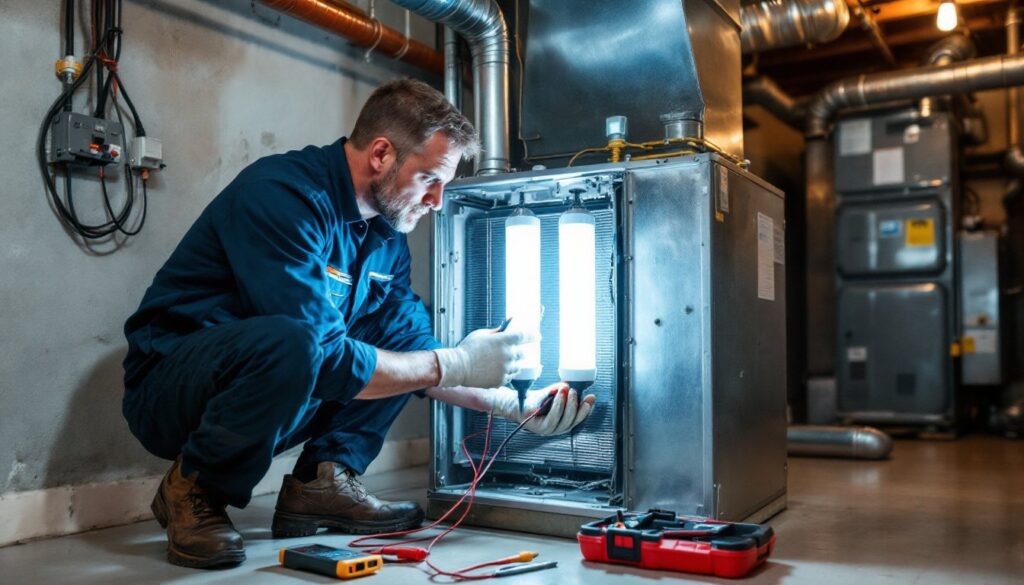
- Installation of UV-C lamps within the air handler or return duct
- Electrical integration to power the unit (usually 120V or 24V)
- Ongoing maintenance like bulb replacement and system checks
Most contractors who handle UV installations are licensed HVAC technicians, not general handymen. The work involves accessing ductwork, mounting lamp fixtures, and wiring into the furnace or air handler’s electrical system. Some jurisdictions require permits for HVAC modifications, so check local building codes before scheduling installation.
Homeowners can’t typically DIY this project. While bulb replacement might be accessible once the system is in place, initial installation requires cutting into sheet metal ducts, sealing penetrations, and ensuring the UV lamp’s intensity is correctly positioned to sterilize passing air without creating ozone byproducts.
How UV Air Purification Technology Works
UV air purifiers use UV-C light in the 254-nanometer wavelength range to disrupt the DNA of microorganisms. When bacteria, mold spores, or viruses pass through the UV light field, the radiation damages their cellular structure, preventing reproduction and effectively neutralizing them.
The technology relies on two factors: intensity and exposure time. Air moving through a residential HVAC system travels fast, typically 400 to 600 feet per minute. For UV sterilization to work, the lamp must emit enough UV-C energy and be positioned close enough to the airstream that microorganisms receive a lethal dose during their brief pass through the light zone.
There are two main UV configurations:
- Coil sterilization units mount near the evaporator coil, targeting mold growth on the wet, cool surface where condensation collects. These run continuously.
- Air sterilization units mount in the supply or return duct, treating the airstream itself. These cycle with the blower.
Important: Not all UV lamps are the same. Some cheaper models produce ozone as a byproduct, which can irritate lungs and damage materials. Look for systems certified as ozone-free and compliant with UL or ETL safety standards. Professional installers should verify lamp specs before installation.
Benefits of Professional UV Air Purifier Installation
Hiring a licensed contractor for UV air purifier installation ensures the system works as intended and doesn’t create new problems. Here’s what professional service brings to the table:
Correct Sizing and Placement
Contractors calculate UV lamp output based on duct dimensions, airflow velocity, and HVAC tonnage. A 36-watt lamp might be sufficient for a 3-ton system, but undersizing or poor placement renders the technology useless.
Safe Electrical Integration
UV lamps require dedicated wiring and, in some cases, integration with the air handler’s blower relay so the system only runs when air is moving. Improper wiring can trip breakers or create fire hazards.
Sealed Ductwork
Any penetration into supply or return ducts must be sealed with mastic or foil tape to prevent air leaks. Leaky ducts reduce HVAC efficiency and compromise indoor air quality, the very problem UV systems are meant to solve.
Compliance with Building Codes
Some areas require permits for HVAC modifications. Professional HVAC contractors pull the necessary permits and schedule inspections, keeping the work legal and insurable.
Warranty Protection
Most UV system manufacturers void warranties if the unit isn’t installed by a certified technician. Professional installation preserves that coverage.
While UV lights in HVAC systems can significantly improve air quality by targeting mold and bacteria, the benefits only materialize when the installation is done correctly.
Types of UV Air Purifier Services Available
UV air purifier services fall into several categories, each addressing different needs:
1. New System Installation
This involves mounting a UV lamp assembly inside the air handler or ductwork, running electrical connections, and testing the system. Expect 2 to 4 hours of labor for a straightforward install. Costs vary by region and system complexity but typically range from $400 to $1,200 for parts and labor combined.
2. Retrofit Installation
Adding UV purification to an older HVAC system may require custom mounting brackets or duct modifications. Contractors assess clearance, airflow, and electrical access before recommending a retrofit approach. This can add $100 to $300 to the base installation cost.
3. Bulb Replacement Services
UV-C lamps lose effectiveness over time, even if they still glow. Most manufacturers recommend replacement every 12 to 24 months depending on run hours. Some contractors offer annual maintenance plans that include bulb swaps, filter changes, and system inspections.
4. System Diagnostics and Repair
If a UV lamp stops working, the issue could be a burned-out bulb, faulty ballast, or wiring problem. HVAC techs use UV meters to measure lamp output and diagnose failures. Ballast replacement typically costs $75 to $150 in parts.
5. Whole-Home Air Quality Audits
Some HVAC companies offer comprehensive indoor air quality services that include UV installation alongside HEPA filtration, humidity control, and ventilation improvements. These bundled services can cost $2,000 to $5,000 but address multiple air quality issues at once.
Choosing the Right UV Air Purifier Service for Your Home
Selecting a UV air purifier service isn’t just about finding the cheapest quote. Here’s what to evaluate:
Licensing and Insurance
Confirm the contractor holds a valid HVAC license in your state. Ask for proof of liability insurance and workers’ comp coverage. If something goes wrong during installation, you need protection.
Experience with UV Systems
Not all HVAC techs have experience with UV installations. Ask how many systems they’ve installed and which brands they recommend. A contractor who’s installed dozens of units will know common pitfalls and best practices.
System Compatibility
Your HVAC system’s design affects UV placement. Contractors should inspect the air handler, measure available space, and verify electrical capacity before recommending a specific UV model. If they quote a price without seeing the equipment, that’s a red flag.
Warranty and Service Plans
Check what’s covered under the manufacturer’s warranty and whether the contractor offers ongoing maintenance agreements. Annual service plans that include UV bulb replacement and filter changes typically cost $150 to $250 per year.
References and Reviews
Homeowners can check contractor ratings on platforms like HomeAdvisor to compare service providers and read verified customer reviews. Look for feedback specifically mentioning UV installations.
Transparent Pricing
Request itemized quotes that break out labor, materials, and any additional fees for permits or duct modifications. Avoid contractors who provide vague estimates or pressure you to sign contracts on the spot.
Maintenance and Ongoing Service Requirements
UV air purifiers aren’t install-and-forget devices. They require regular maintenance to remain effective.
Bulb Replacement
UV-C lamps degrade with use. Even if the light still glows, UV output drops significantly after 9,000 to 14,000 hours of operation. Most systems run continuously when the furnace or AC is on, so in a typical home, that translates to annual or biannual replacement. Mark your calendar or hire a contractor with an automatic reminder service.
Lamp Surface Cleaning
Dust and grime accumulate on the lamp’s quartz sleeve, blocking UV light. During bulb replacement, wipe the sleeve with isopropyl alcohol and a lint-free cloth. Never touch the bulb with bare hands, oils from skin reduce lamp life.
Ballast Inspection
The ballast powers the UV lamp. If the lamp flickers, won’t ignite, or produces weak light, the ballast may need replacement. This is a job for an HVAC tech, not a DIY fix.
System Integration Check
Contractors should verify that the UV system is wired correctly to the blower. If the lamp runs when the blower is off, it wastes energy and shortens bulb life.
Safety Note
Always shut off power to the HVAC system before accessing UV lamps. UV-C light can cause skin burns and eye damage. Wear UV-blocking safety glasses if you need to view the lamp while it’s on. Most systems include a safety switch that cuts power when the access panel is removed.
Homes with good maintenance practices see longer system lifespans and better air quality outcomes. Regular upkeep isn’t optional, it’s the price of keeping the technology effective.
Conclusion
UV air purifier services offer a proven way to reduce airborne pathogens and mold in residential HVAC systems, but only when installed and maintained by qualified professionals. From initial assessment and integration to annual bulb swaps, these systems demand expertise and ongoing attention. Homeowners who invest in proper installation and stick to a maintenance schedule will see cleaner air and healthier indoor environments. Choose licensed contractors, verify warranties, and don’t skip bulb replacements, UV purification works, but only when it’s done right.