
Table of Contents
ToggleThat space flanking your fireplace? It’s some of the most underutilized real estate in a room. Whether you’ve got a traditional masonry hearth or a modern linear unit, the zones on either side dictate how the entire wall reads, and how functional the space becomes. Done right, these areas anchor your furniture layout, add storage, and give the room a finished look. Done wrong, they collect clutter or sit awkwardly empty. This guide covers practical and stylish approaches to designing both sides of your fireplace, from built-ins that require basic carpentry to simple furniture swaps you can tackle this weekend.
Key Takeaways
- Either side of fireplace ideas can solve storage, anchor furniture, and transform how your entire room reads with intentional design choices.
- Maintain at least 12 inches of clearance from combustible materials to the firebox, and consult local fire codes and manufacturer specs before adding built-ins or furniture.
- Built-in shelving and cabinetry maximize vertical storage and unify the wall, but require intermediate carpentry skills; freestanding bookcases and furniture offer flexibility without permanent commitment.
- Plants and natural elements like tall fiddle-leaf figs or driftwood arrangements soften hard edges and balance the horizontal hearth while drawing the eye upward.
- Choose symmetrical design for traditional formal spaces that emphasize balance, or asymmetrical arrangements for modern, eclectic interiors that showcase personality and visual interest.
- Budget-friendly options like floating shelves, gallery walls, and peel-and-stick panels deliver high-impact results in a single weekend without requiring full remodeling projects.
Why the Space Around Your Fireplace Matters
Fireplaces naturally draw the eye, they’re focal points by default. But the walls beside them often determine whether that focal point feels intentional or incomplete. Blank space can make even a beautiful fireplace feel isolated. Conversely, mismatched furniture or poorly scaled décor creates visual clutter.
From a functional standpoint, fireplace walls are prime territory for storage, display, or seating. Most living rooms are organized around the hearth, so whatever you place beside it gets seen constantly. It’s worth getting right.
Consider clearances first. If you’re adding built-ins, shelving, or furniture, maintain at least 12 inches of clearance from combustible materials to the firebox opening (check your local fire code, some jurisdictions require more). For gas or electric units, consult the manufacturer’s specs. If you’re working near a wood-burning fireplace, factor in heat spread and ash scatter.
Measure the available width on each side. Narrow walls (under 18 inches) limit your options but can still accommodate slim shelving or sconces. Wider spans (36 inches or more) open up possibilities for cabinetry, bookcases, or even seating nooks.
Built-In Shelving and Cabinetry Solutions
Built-ins are the most permanent, and most impactful, way to frame a fireplace. They unify the wall, add storage, and can be customized to your exact specs. You’ll need intermediate carpentry skills, a table saw or circular saw, and a weekend or two.
Materials: Use 3/4-inch plywood or MDF for cabinet boxes and shelves. Paint-grade MDF is cheaper and takes primer well: plywood is stronger if you’re spanning wide shelves without center supports. For a traditional look, add face frames from 1×2 or 1×3 poplar, then finish with trim molding to match your baseboards.
Design Options:
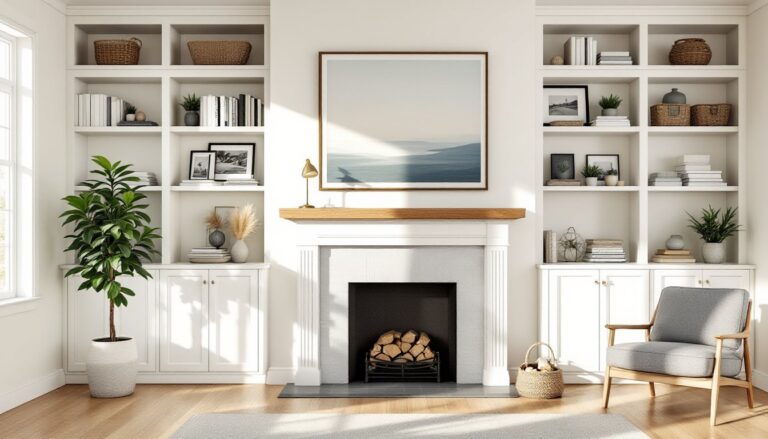
- Floor-to-ceiling bookcases: Maximize vertical storage. Frame them with crown molding at the top and baseboard at the bottom for a cohesive look.
- Lower cabinets with upper shelving: Closed storage below hides media equipment, board games, or firewood: open shelves above display books and décor.
- Alcove inserts: If your fireplace sits in a recessed wall, build shallow cabinets that fit flush within the alcoves. This works especially well in older homes with existing nooks.
Installation Notes:
Locate studs with a stud finder and fasten cabinets with 3-inch cabinet screws driven into studs at the top and bottom. Use shims to level units if your floor is uneven. For open shelving, support each shelf with adjustable shelf pins or fixed cleats screwed into the cabinet sides.
If you’re installing around a brick or stone surround, plan for irregular edges. Scribe your cabinets to fit, or leave a 1/4-inch reveal and caulk the gap.
Built-ins often require electrical work if you want integrated lighting. Running low-voltage LED strip lights under shelves is DIY-friendly: adding outlets inside cabinets for electronics usually requires a licensed electrician unless you’re comfortable with NEC-compliant wiring.
Statement Furniture Placement Ideas
Not ready to commit to built-ins? Freestanding furniture offers flexibility and can be swapped seasonally or when you move.
Tall Bookcases: Flank the fireplace with matching or complementary bookcases. Choose units at least 72 inches tall to fill vertical space without looking squat. Anchor them to the wall with furniture straps to prevent tipping, especially important if you have kids.
Accent Chairs or Wingbacks: Symmetrical seating beside a fireplace creates a classic conversation zone. Position chairs 18–24 inches from the firebox edge to keep them out of the heat zone. This setup works well in formal living rooms or dens where the fireplace is the primary seating focus.
Narrow Console Tables: A slim console (12–16 inches deep) can hold lamps, plants, or seasonal décor without crowding the room. Place one on each side, or use a single console on one side paired with a plant stand or bookcase on the other for asymmetry.
Media Cabinets: If your TV is mounted above the fireplace (not ideal for neck strain, but common), low media cabinets on either side balance the upper visual weight. Choose units with doors to hide cables and equipment.
Scale Matters: Furniture should be proportional to the fireplace surround. A massive stone hearth can handle chunky cabinets: a sleek modern unit looks best with lighter, leggier pieces. Step back and assess, if the furniture competes with the fireplace rather than framing it, scale down.
Tall Plants and Natural Elements
Plants soften hard edges and add life to a room. They’re especially effective beside fireplaces, where vertical greenery draws the eye upward and balances the horizontal hearth.
Best Plant Choices:
- Fiddle-leaf figs, rubber plants, or dracaena: All tolerate indoor conditions and grow tall enough (5–8 feet) to fill the space.
- Faux plants: If your fireplace gets heavy use or the spot is low-light, high-quality faux plants (look for ones with realistic textures and varied leaf shapes) eliminate maintenance.
Placement Tips:
Use planters that elevate the plant, woven baskets, ceramic pots on stands, or tapered containers. The base should be wide enough for stability. Plants near active fireplaces should be set back at least 24 inches to avoid heat damage or dry-out.
Mix heights by pairing a tall plant on one side with a shorter plant and a stack of books or a sculpture on the other. This approach suits homeowners who prefer modern interior design aesthetics that avoid rigid symmetry.
Other Natural Elements:
- Driftwood or branch arrangements in tall vases
- Stacked firewood in a decorative log holder (functional if you burn wood)
- Woven baskets for textural contrast
Keep it simple, one or two large natural elements per side read cleaner than a cluttered collection.
Symmetrical vs. Asymmetrical Design Approaches
Symmetry is the traditional choice, matching bookcases, twin sconces, identical plants. It’s formal, calming, and emphasizes the fireplace as the center of gravity. Symmetry works especially well in traditional or transitional spaces where balance is key.
How to Execute Symmetry:
- Match heights, colors, and styles on both sides
- Center décor items within shelves
- Use pairs: two lamps, two chairs, two plants
Asymmetry feels more modern and dynamic. It’s harder to pull off, unbalanced arrangements can look accidental rather than intentional, but it adds visual interest.
How to Execute Asymmetry:
- Balance visual weight rather than matching items. A tall bookcase on one side can be offset by a large piece of art and a low cabinet on the other.
- Vary textures and shapes while keeping a cohesive color palette
- Use the rule of thirds: place key elements at one-third or two-thirds of the wall’s width rather than dead center
Asymmetry suits eclectic interiors, where unexpected pairings and colorful luxury details showcase personality. It’s also practical when architectural quirks (like a window, door, or HVAC vent) prevent true symmetry.
Which to Choose?
Default to symmetry unless you’re confident in your eye for balance. Asymmetry requires more trial and error but pays off with a more personalized result.
Budget-Friendly DIY Options for Fireplace Sides
Not every solution requires a full remodel. Here are low-cost, high-impact projects you can knock out in a day or weekend.
Floating Shelves: Install 2–4 floating shelves per side using heavy-duty brackets rated for the load you plan to display. For a clean look, use concealed brackets that slide into routed channels in the shelf back. Space shelves 12–16 inches apart vertically. Cost: $50–150 in materials.
Peel-and-Stick Wallpaper Panels: Frame the fireplace by applying removable wallpaper or wood-look panels to the alcoves. This adds pattern and depth without commitment. Measure carefully and use a level, peel-and-stick is forgiving but not foolproof.
Gallery Wall: Hang a curated collection of art, photos, or mirrors on each side. Use a paper template to plan spacing before hammering nails. Aim for 2–3 inches between frames. This approach suits renters or anyone who likes to refresh décor frequently.
Repurposed Furniture: Scour thrift stores or Craigslist for mismatched bookcases or cabinets. Paint them the same color (a good-quality primer and satin latex paint run about $60 per gallon, covering roughly 400 square feet). Unify the look with matching hardware.
DIY Ladder Shelves: Build simple A-frame ladder shelves from 1×4 or 1×6 pine boards. Lean them against the wall (secure the top with an L-bracket into a stud). Total cost: under $40 per side. They’re lightweight, easy to move, and suit casual spaces.
Wall Sconces: Swap overhead lighting for hardwired or plug-in sconces flanking the fireplace. This adds task lighting for reading and highlights the fireplace wall. Battery-powered LED sconces are the easiest install but least bright: hardwired fixtures require an electrician unless you’re comfortable with basic wiring.
Paint Contrast: If the wall around your fireplace is the same color as the rest of the room, paint the alcoves or side sections a contrasting shade. Use painter’s tape and a quality angled brush for crisp lines. This costs almost nothing but dramatically defines the space.
Conclusion
The space beside your fireplace isn’t just decorative, it’s functional square footage that can solve storage problems, anchor furniture, and tie a room together. Whether you’re building custom cabinetry, styling freestanding furniture, or hanging a few shelves, the key is proportion, clearance, and a clear plan. Start by measuring your available space and heat zones, then choose an approach that fits your skill level and budget. A well-dressed fireplace wall makes the whole room feel finished.