Table of Contents
ToggleConcrete surfaces take a beating. Oil stains in the driveway, algae creeping across the patio, years of grime caked into the walkway, these aren’t just cosmetic issues. Dirty concrete degrades faster, becomes slippery when wet, and drags down your home’s curb appeal. While a garden hose and scrub brush might handle light surface dirt, professional concrete pressure washing services cut through embedded stains, restore original texture, and extend the life of your hardscape. Whether you’re prepping for a sealer application, tackling years of neglect, or just want your entryway looking sharp again, understanding what pros offer, and what you’re paying for, makes all the difference.
Key Takeaways
- Professional concrete pressure washing services use 2,500–4,000 PSI with hot water and commercial degreasers to remove embedded stains, mold, and years of buildup that surface cleaning cannot reach.
- Concrete pressure washing extends surface life, improves safety by eliminating slip hazards, and reveals structural issues early before they require expensive repairs.
- Expect to pay $0.15–$0.40 per square foot for standard residential concrete pressure washing, with a typical 400-square-foot driveway costing $80–$160, though heavy staining and complex projects increase the price.
- Professional preparation includes pre-treatment with specialized chemicals based on stain type (degreasers for oil, oxalic acid for rust, bleach for organic stains), surface cleaning with rotating attachments, and thorough rinsing.
- Choose contractors who carry liability insurance, own professional-grade equipment, provide itemized written estimates, and handle runoff responsibly rather than those offering unrealistic promises or using consumer-grade tools.
- Seal your concrete within 30 days after professional cleaning, then maintain it through regular sweeping, prompt spill cleanup, and annual touch-ups to protect your investment and keep surfaces looking fresh.
Why Professional Concrete Pressure Washing Matters
Concrete’s porous surface traps dirt, mold, mildew, and organic matter deep below what you can see. Surface cleaning only addresses the top layer: the embedded gunk continues to hold moisture, accelerate freeze-thaw damage in cold climates, and promote algae growth in humid regions.
Professional-grade pressure washers deliver 2,500 to 4,000 PSI (pounds per square inch), enough force to strip years of buildup without gouging the surface when used correctly. That’s a far cry from the 1,300–1,800 PSI consumer units at big-box stores. Pros also use hot water systems and commercial degreasers that break down oil, rust, and tannin stains from leaves, stuff cold water alone won’t touch.
Beyond aesthetics, clean concrete is safer. Algae and mold turn smooth surfaces into slip hazards, especially around pool decks and shaded patios. Regular professional cleaning also reveals cracks, spalling, or settling issues early, so you can address structural problems before they require full slab replacement.
If you’re planning to seal or stain your concrete, pressure washing is non-negotiable. Sealers won’t bond to dirty surfaces, and you’ll end up with peeling, blotchy coverage within months. Pros know the right PSI and nozzle angles to prep surfaces without damaging the aggregate or creating surface erosion.
What to Expect from Concrete Pressure Washing Services
A legitimate service does more than show up with a machine and blast water at your driveway. Expect a walk-through where the contractor identifies surface type (broom-finished, stamped, exposed aggregate), notes problem areas like oil stains or efflorescence, and discusses any existing damage that pressure washing won’t fix.
The Professional Cleaning Process
The process starts with pre-treatment. For driveways with oil stains, techs apply a degreaser and let it dwell for 10–15 minutes to break down petroleum residue. Rust stains get an oxalic acid treatment: organic stains (leaves, berries) may require a bleach-based solution. Skipping this step means you’re just spreading the stain around.
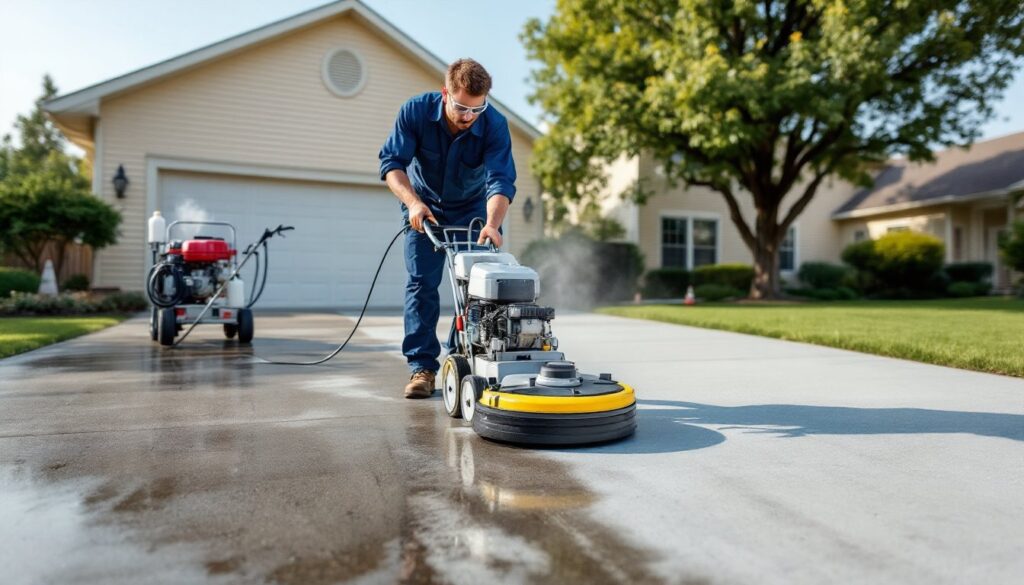
Next comes the actual washing. Pros use surface cleaners, rotating bar attachments with multiple nozzles that provide even coverage and prevent the streaky “tiger striping” you get from wand-only work. They maintain consistent distance and overlap each pass to avoid lines. Water temperature matters: hot water (180–200°F) emulsifies grease and kills mold spores more effectively than cold.
Edges, corners, and control joints get detail work with a wand and 15- or 25-degree nozzle. A zero-degree nozzle (the red tip) is almost never appropriate for concrete, it concentrates force into a pinpoint that can etch or pit the surface.
Finally, the crew rinses thoroughly and may apply a neutralizing agent if strong chemicals were used. Runoff is directed away from landscaping and storm drains where possible. The whole process for a standard two-car driveway typically takes 1.5–3 hours, depending on stain severity.
Most services also offer post-cleaning sealing. If you opt for this, the concrete needs 48–72 hours to dry completely before sealer application, especially in humid climates. Sealing too early traps moisture and causes hazing or blistering.
How Much Does Concrete Pressure Washing Cost?
Pricing varies by region, surface size, and condition, but expect $0.15 to $0.40 per square foot for standard residential work. A 400-square-foot driveway typically runs $80–$160: a 1,000-square-foot patio might cost $200–$400. Services in metropolitan areas skew higher: rural or suburban regions often come in at the lower end.
Heavy staining adds to the bill. Oil-saturated garage floors or driveways with years of rust require multiple chemical treatments and extra dwell time. Some contractors charge a flat trip fee ($50–$100) plus per-square-foot pricing: others bundle it into the quote. According to cost estimator tools, homeowners nationally spend between $120 and $300 for typical driveway pressure washing services, though complex jobs can exceed $500.
Minimum charges are common, many pros won’t show up for less than $100–$150, even if your area is small. If you’re only cleaning a 10×10 patio, you’re still paying for the tech’s time, equipment transport, and setup.
Sealing is usually quoted separately, adding $0.10 to $0.30 per square foot depending on sealer type (penetrating vs. film-forming). Package deals that include washing and sealing often save 10–20% compared to standalone services.
Get at least three quotes, and make sure each includes specifics: square footage, pre-treatment chemicals, sealing options, and any repair work (crack filling, joint sanding). The lowest bid isn’t always the best, fly-by-night operators may skip pre-treatment, use consumer-grade equipment, or damage your concrete with improper technique.
Choosing the Right Pressure Washing Service
Start with proof of insurance. Pressure washing can cause property damage (broken windows, damaged siding, landscape erosion) or personal injury. A legit contractor carries general liability coverage and workers’ comp if they have employees. Ask for a certificate: if they hesitate, walk away.
Check reviews on platforms like Angi or local Facebook groups. Look for comments on punctuality, cleanup, and how the crew handled problem areas. A few mediocre reviews aren’t a dealbreaker, but patterns of no-shows, damage claims, or incomplete work are red flags.
Ask about equipment specifics. Contractors who own hot water rigs and commercial surface cleaners deliver better results than those renting consumer units. Inquire about PSI ratings and whether they adjust pressure for different surfaces, stamped or stained concrete requires gentler treatment (1,500–2,000 PSI) than plain broom-finished slabs.
Written estimates should itemize work: square footage, pre-treatment products, pressure settings, and expected results. If a quote promises to “remove all stains,” that’s unrealistic. Deep rust, old paint, or acid stains may lighten but won’t vanish entirely.
Ask if they handle runoff responsibly. In some jurisdictions, washing wastewater into storm drains is illegal if it contains degreasers or solvents. Pros may use containment mats and vacuum recovery systems or route runoff to landscaping or gravel areas.
Finally, confirm scheduling and weather contingencies. Pressure washing requires dry weather and temps above 50°F for best results. A pro should have a clear rain-delay policy and won’t pressure you to proceed in marginal conditions just to hit their schedule.
DIY vs. Hiring a Professional: Making the Right Choice
Renting a pressure washer from a big-box store costs $60–$100 per day. Add nozzle tips, extension wands, surface cleaner attachments, and cleaning chemicals, and you’re in for $100–$150 total. If your project is small (a single walkway or small patio) and lightly soiled, DIY makes sense.
But rented units are typically cold water, 2,000–2,500 PSI models, adequate for maintenance cleaning but underpowered for oil stains, embedded mold, or years of neglect. You’ll spend more time and may not get professional-grade results. Improper technique also risks damage: holding the nozzle too close etches concrete, inconsistent passes leave stripes, and the wrong tip can blast away joint sand or surface texture.
Large areas tilt the math toward hiring out. Washing a 1,000-square-foot driveway yourself might take 6–8 hours (including prep, cleaning, and dealing with the learning curve). A pro crew knocks it out in 2–3 hours with better results. Your time has value, if you’d rather spend Saturday on other projects, the $200–$300 service cost is often worth it.
Safety matters. Pressure washers cause thousands of ER visits annually, lacerations from high-pressure spray, falls from recoil, and chemical burns from improper cleaner use. Pros wear steel-toed boots, eye protection, and know how to handle kickback.
If you’re prepping concrete for sealing, staining, or resale, professional results matter. Uneven cleaning or missed spots show up glaringly under a sealer. For routine maintenance cleaning (annual patio refresh, light driveway touch-ups), DIY is doable if you’re comfortable with power equipment and follow safety protocols.
Maintaining Your Concrete After Professional Cleaning
A professional wash doesn’t mean you’re done. Concrete’s porous surface will reabsorb dirt, so maintenance extends the results.
Seal within 30 days if your concrete is unsealed. A penetrating silane or siloxane sealer soaks into the surface, repelling water and oil without changing appearance. Film-forming acrylic sealers add a slight sheen and make future cleaning easier. Reapply penetrating sealers every 3–5 years: acrylics need recoating every 1–2 years depending on traffic and UV exposure.
Sweep regularly. Leaves, dirt, and organic debris left sitting on concrete promote mold growth and staining. A quick weekly sweep prevents buildup. For driveways, address oil drips immediately, fresh oil wipes up with rags and dish soap. Once it soaks in and oxidizes, it’s much harder to remove.
Spot-clean spills promptly. Rust (fertilizer, metal furniture), tannins (leaves, berries), and grease are easier to treat fresh. Keep a mild alkaline cleaner (like trisodium phosphate diluted per label directions) on hand for quick scrubbing. Avoid acid-based cleaners unless you’re targeting efflorescence or rust, they can etch concrete over time.
Consider annual or biennial pro touch-ups rather than waiting until surfaces look grimy again. Maintenance washes are faster and cheaper than heavy-duty restorations. Resources like ImproveNet’s cost guides can help budget for routine services alongside other home upkeep.
In freeze-thaw climates, avoid de-icing salts on newly cleaned or sealed concrete during the first winter. Salts accelerate surface spalling. Use sand for traction instead, or choose calcium magnesium acetate de-icers, which are gentler on concrete.
Finally, manage drainage. Water pooling on concrete accelerates staining and freeze-thaw damage. If you notice standing water after cleaning, consider regrading or cutting shallow relief cuts to direct runoff away from the slab.