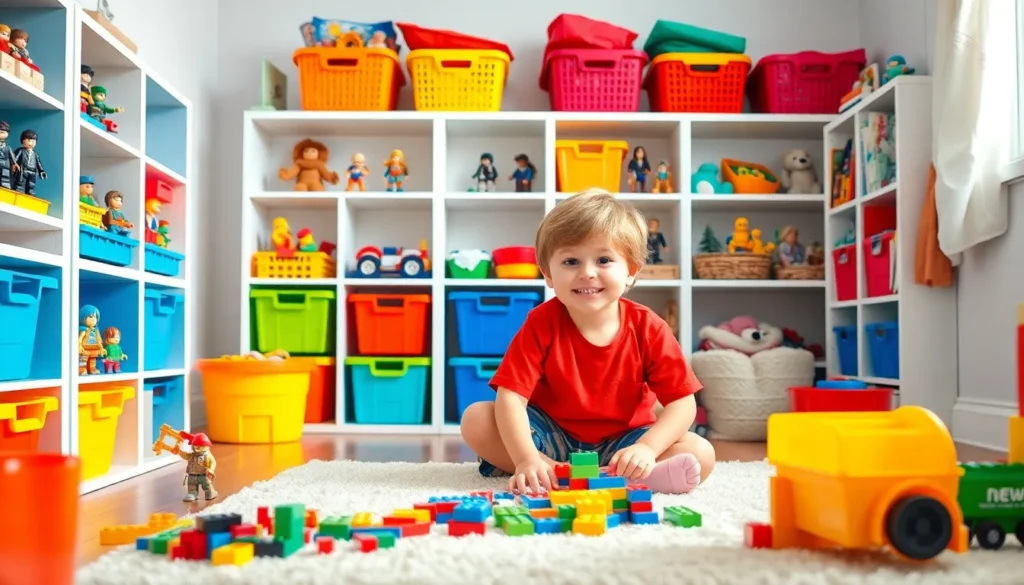
Tired of tripping over action figures or stepping on rogue LEGO bricks? You’re not alone. Toy chaos can turn any home into a miniature war zone, leaving parents wondering if they’ve accidentally signed up for a game of “find the floor.” But fear not! With a sprinkle of creativity and a dash of organization, transforming that toy tornado into a tidy oasis is totally possible.
Benefits Of Toy Organizing
Organizing toys offers multiple advantages for both children and parents. Increased safety occurs as neatly arranged toys reduce hazards, allowing children to play without the risk of tripping. Organized spaces encourage children to engage with their toys, promoting creativity and playtime.
Enhanced learning takes place in an orderly environment. Children benefit from easy access to toys, making it simpler for them to locate items and develop problem-solving skills. Organized play areas facilitate cooperative play, which builds social skills and enhances teamwork.
Simplified cleanup processes become evident when toys are organized. Children learn responsibility as they return toys to their designated places, cultivating habits that extend beyond playtime. Streamlined cleaning routines save time for parents and create a more pleasant living environment.
Decluttering also contributes to improved mental clarity. A tidy space reduces distractions, allowing children to focus better on activities. Lower stress levels occur for parents, as organized toy storage creates a calm home atmosphere.
Increased lifespan of toys becomes a notable benefit. Proper storage protects toys from damage, ensuring children get the most value from their playthings. A well-organized environment promotes a sense of ownership, leading to better care of toys.
Overall, toy organizing boosts the efficiency of daily routines and nurtures a positive play experience.
Creative Toy Organizing Ideas
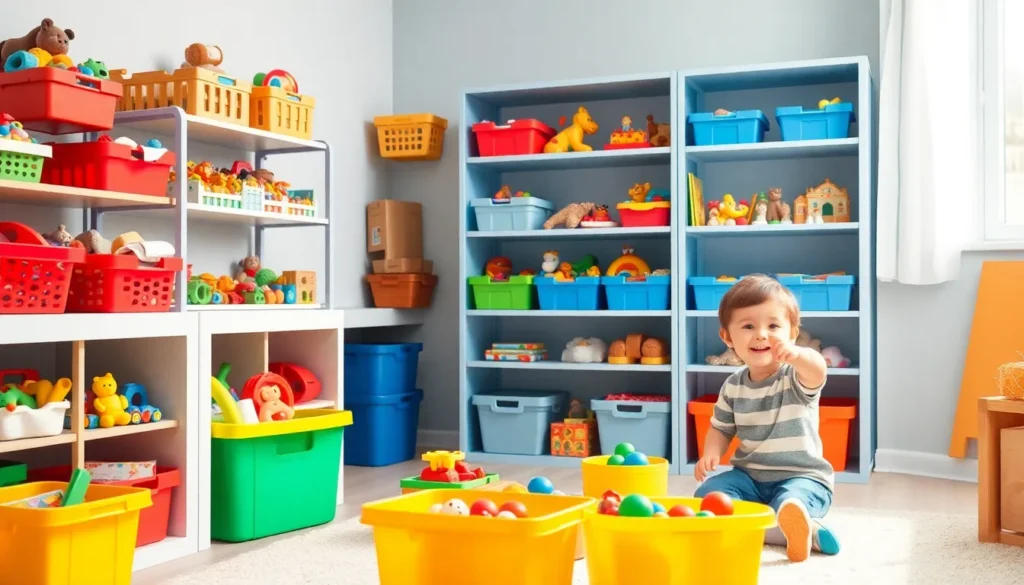
Creativity plays a vital role in transforming cluttered play areas into organized spaces. Effective toy organization not only enhances aesthetics but also promotes a functional environment for children.
Bins And Baskets
Bins and baskets come in various sizes and shapes, catering to different types of toys. Fabric bins work well for soft toys, while clear plastic bins allow easy visibility of contents. Labels on each container help children identify where toys belong, simplifying the cleanup process. Stacking bins maximize vertical space, making them ideal for smaller rooms. Baskets can add a decorative touch while keeping toys accessible. Using themed colors or patterns can create a visually appealing arrangement that encourages children to participate in organizing.
Shelving Solutions
Shelving solutions provide an excellent way to utilize wall space effectively. Open shelving allows easy access to frequently used toys. Floor-to-ceiling shelves can accommodate larger collections and create designated zones for different toy categories. Adjustable shelves offer flexibility as children grow and their toy preferences change. Incorporating bins or baskets on shelves aids in reducing mess while keeping the area tidy. Wall-mounted shelves display toys and promote creativity, turning the storage area into an engaging part of the room.
Toy Rotation Systems
Toy rotation systems effectively manage toy collections while keeping playtime fresh and exciting. Rotating toys every few weeks maintains children’s interest and prevents overwhelm. Designating a specific area for stored toys ensures quick access when switching them out. This system also fosters appreciation for each toy, as children rediscover items they may have neglected. Parents can track which toys are most popular and adjust their collections accordingly. Establishing a consistent rotation schedule teaches responsibility and enhances organization skills.
DIY Toy Organization Projects
Transforming cluttered toy spaces into organized areas enhances playtime and fosters creativity. Several DIY projects provide practical solutions using everyday materials.
Upcycling Materials
Repurpose items typically discarded into useful storage solutions. Milk crates create sturdy shelving units, while old jars serve as clear containers for small toys. Wooden pallets can turn into striking toy bins or seating options. Suitcases give a vintage touch while providing ample storage for stuffed animals. Cardboard boxes, when decorated, become attractive bins for LEGO collections. Utilizing materials already on hand promotes sustainability while simplifying organization.
Customized Storage Solutions
Design custom storage tailored to specific toy types. Build simple shelving units that accommodate various heights for different toys. Incorporate canvas bins or fabric boxes that add a pop of color and style. Create personalized labels to help children learn to identify where each toy belongs. Use pegboards to display action figures and provide easy access for playtime. Consider multi-functional furniture that doubles as seating and toy storage to maximize space efficiency.
Tips For Maintaining Organization
Consistency plays a critical role in maintaining toy organization. Set a daily routine for clean-up after playtime, and make it a fun activity with children, using a timer or music as motivation. Regularly involve kids in the organization process, teaching them the significance of tidiness.
Labeling storage bins and baskets simplifies the identification of toys. Color-coded labels, or pictures for younger children, enhance clarity and encourage children to return toys to their designated spots. Keep labels consistent as toys change over time.
Periodic decluttering helps manage toy inventories. Schedule seasonal evaluations to assess which toys remain loved and which can be donated or discarded. Not only does this process streamline collections, but it also teaches children about sharing and responsibility.
Establishing a toy rotation schedule fosters engagement and keeps clutter at bay. Rotate toys every few weeks, allowing children to rediscover old favorites while minimizing overwhelming options. This approach also encourages thoughtful play instead of aimless exploration.
Creating a designated play area contributes to ongoing organization. Designate a specific room or corner of a room for toys, ensuring it’s away from high-traffic areas. This focused space invites children to play without scattering toys throughout the house.
Utilizing child-friendly storage solutions increases accessibility for kids. Use low shelving units that allow children to reach their toys. Moreover, incorporating transparent bins displays contents, making it easier for kids to identify what they want to play with.
Incorporating regular check-ins with children reinforces organization habits. Discuss the importance of keeping their space tidy. Making it a collaborative effort instills responsibility and pride in maintaining an organized environment.
Transforming a chaotic toy space into an organized haven is achievable with the right strategies. By implementing creative storage solutions and involving children in the process, families can foster a sense of responsibility and enhance playtime experiences.
Maintaining organization is key to reaping the benefits of a tidy environment. Consistent clean-up routines and periodic decluttering not only simplify daily tasks but also contribute to a child’s development.
With these toy organizing ideas in hand, parents can create a more enjoyable and efficient play area that nurtures creativity and learning. An organized space paves the way for happier playtimes and less stress for everyone involved.